What to wear to your boudoir session (and why it matters less than you think)
At some point between deciding to book a boudoir session and actually showing up for one, most people spend a disproportionate amount of time worrying about what to wear. I know this because they tell me. They've opened seventeen browser tabs. They've abandoned three online shopping carts. They've texted a friend at midnight asking if a particular bodysuit runs small.
I want to gently offer a reframe: the clothes matter a lot less than you think they do. And understanding why might actually make the whole thing easier.
What makes an image work
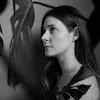
The images from a boudoir session that stop people in their tracks (the ones that get screenshot and texted to a best friend, the ones that make someone cry a little at their reveal) are almost never about the outfit. They're about an expression caught at the right moment—a genuine smile, a look of vulnerability and honest that happens when someone finally stops performing and just exists.
None of that comes from what you're wearing. It comes from the moment itself.
Your outfit is a starting point. It gives us something to work with, a texture and a tone. But it's not the image. You are the image.
That said — here's how to actually think about closthing
Practical guidance is still useful, so here's how I'd actually approach it.
Start with what already makes you feel like yourself. Before you buy anything new, look at what's already in your closet with fresh eyes. The oversized linen shirt you love on lazy Sunday mornings. The slip dress you've had for years that still feels exactly right. A piece of jewelry that means something. Something that belongs to your partner. The items that feel like you (not a version of you dressed up for an occasion) tend to photograph with a naturalness that brand-new lingerie sometimes doesn't.
Bring more than you think you need. I usually recommend two or three options. Not because we'll necessarily use all of them, but because having choices in the room means we can follow the session where it wants to go. Sometimes the third option, the one you almost left at home, ends up producing the best images.
Think in textures, not just styles. Lace, silk, cotton, linen, velvet. Different fabrics catch light differently and create different moods. A silk robe reads one way; an oversized chunky knit reads another. Neither is more or less right. But thinking about texture helps you build variety across your looks without having to overthink it.
You don't have to wear lingerie. I'll say it plainly: lingerie is definitely an option, but not a requirement! Some of the most powerful boudoir images I've made involved a worn-in t-shirt, a simple wrap, or nothing elaborate at all. If lingerie feels like you, bring it. If it doesn't, don't force it. A session where you feel like yourself in what you're wearing will always produce better images than one where you're self-conscious about the outfit.
Fit matters more than style. Whatever you bring, make sure it fits the body you have right now. Not the body you had three years ago, not the one you're working toward. Clothing that fits well photographs well. Clothing that pulls, gaps, or needs constant adjusting creates friction that shows up in the images.
What I'd tell you to skip
A few things that tend to complicate rather than help:
Anything with heavy graphics or logos tend to draw the eye and become dated very quickly. Brand new shoes you've never walked in mean you'll be thinking about your feet instead of the session. Anything that requires constant adjusting to stay in place. And anything you bought because you thought it was what you were "supposed" to wear to something like this, rather than because it felt like you.
The thing that actually determines how your images turn out
It's not the outfit. It's how you feel when you walk in the door and how quickly you're able to let go of the idea that there's something you're supposed to be doing.
I'll take care of the direction, the light, the composition. Your only job is to show up and let the session find itself. That tends to happen faster than people expect, and the images that come from that place—relaxed, unguarded, actually you—are the ones people come back to years later.
If you want to talk through what to bring before your session, that's part of what our pre-session conversation is for. [Read more about how I approach boudoir sessions], or [reach out here] and we'll figure it out together.